Lab
Small experiments, real results, and the useful questions they leave behind.
26 stories to explore

One dot can pull a straight line out of place
Least squares gives distant observations real influence. A resistant comparison helps expose that influence without deciding which data deserve belief.
Why a computer sometimes disagrees with simple arithmetic
Finite binary numbers cannot hold every decimal fraction. The small mismatch is usually manageable, provided we know which arithmetic we asked for.

The meeting that happens twice at the same local time
A clock label is not always a unique moment. A historical daylight-saving transition shows why dates, zones and offsets belong together.

When one character is more than one thing
A visible symbol, a Unicode code point and a stored byte are different units. Counting text requires choosing which one you mean.
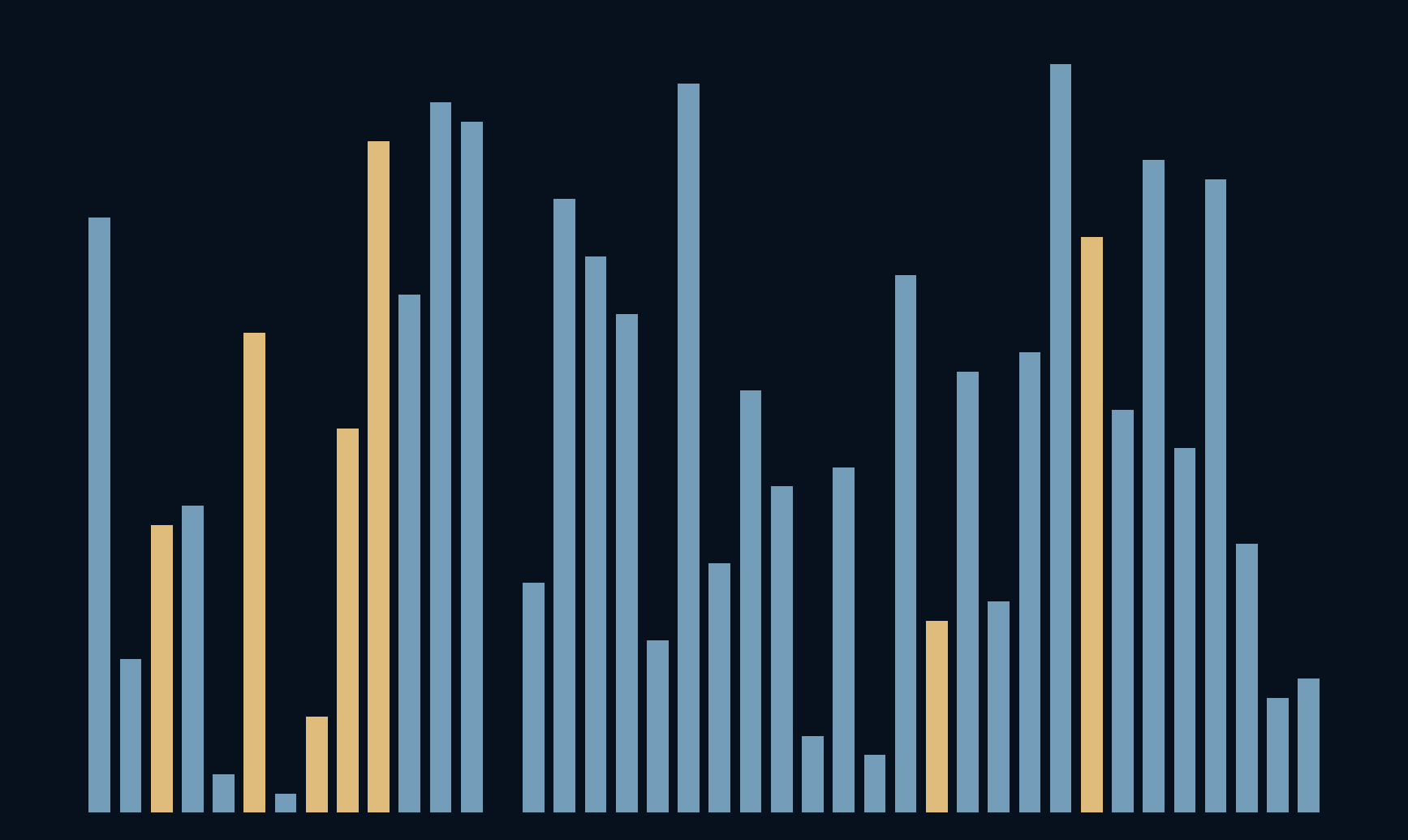
Why a faster idea can matter more than a faster machine
Counting comparisons reveals a difference that a stopwatch can blur: some sorting strategies avoid work that others repeat.

The search that keeps throwing half away
An ordered list lets one answer rule out an entire region. The speed comes from that structure, not from guessing the target.

Why your computer tries to remember the recent past
A small cache must choose what to forget. Recent use and arrival order make different guesses about what comes next.
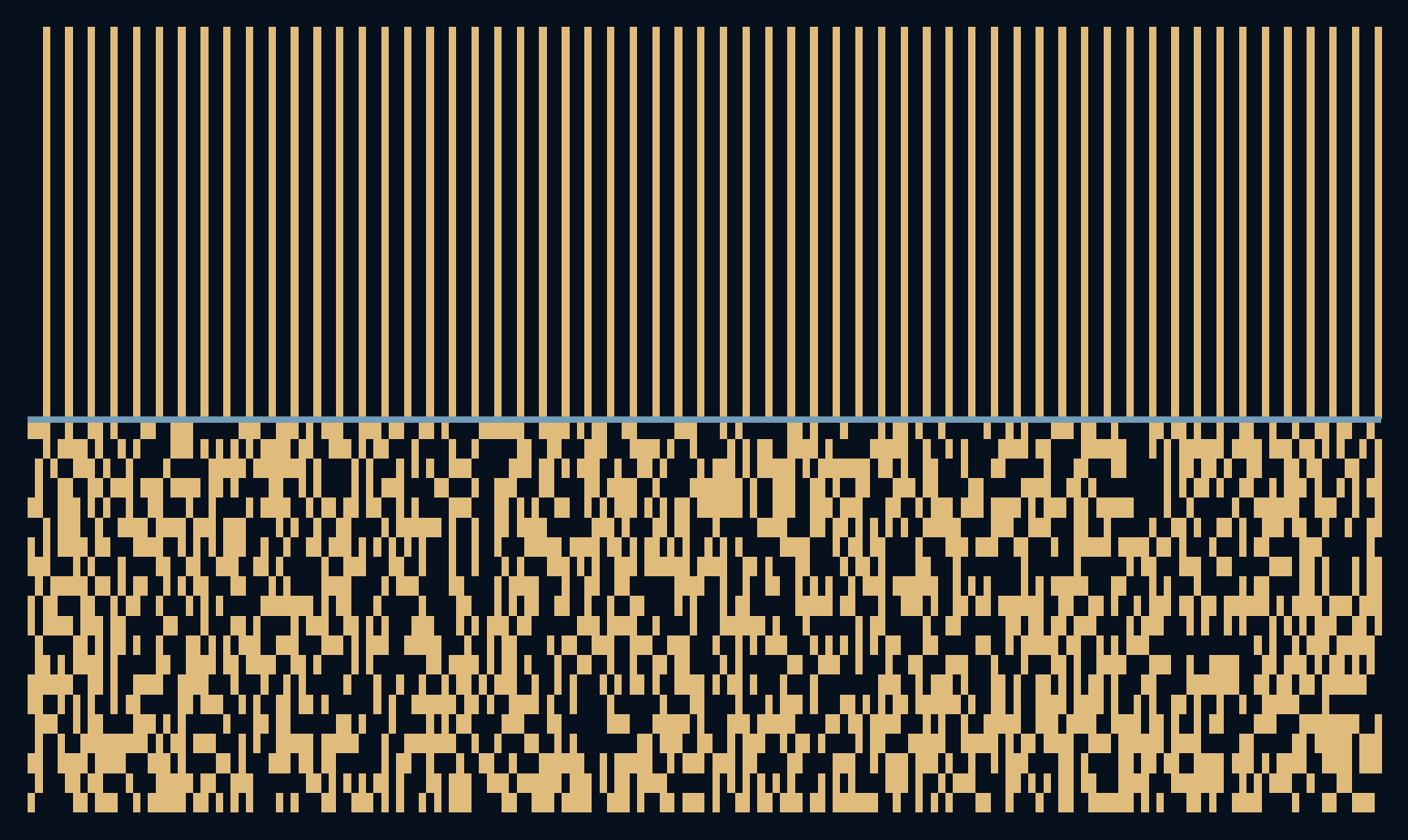
Repetition is free space in disguise
Lossless compression changes a description, not the recovered bytes. Predictable input gives that description something to shorten.

The message that repairs one wrong bit
Three carefully arranged check bits can locate a single error in a seven-bit block. The same decoder becomes misleading when its error assumption is broken.